For iPhone & Apple Watch

Your nervous system is always talking. Learn to listen.

SoMana turns your Apple Watch HRV and sleep data into a daily Regulation Score — so you can finally see how stress, recovery, and your nervous system are actually doing.

7-day free trial HealthKit private & secure Evidence-based practices
SoMana app dashboard showing a Regulation Score of 76 with HRV, heart rate, and sleep metrics
SoMana Pattern Maps showing correlations between stress triggers and HRV
HRV from Apple Watch Sleep & recovery signals Personal pattern detection Breathwork & reflections
What is SoMana?

A nervous system regulation app for iPhone & Apple Watch

Most health apps track what you do. SoMana tracks what's happening underneath.

Your Apple Watch already measures HRV (heart rate variability), resting heart rate, sleep quality, and respiratory rate. SoMana reads those signals from Apple Health and turns them into something you can actually use: a daily Regulation Score, pattern maps, and reflections that connect what your body is doing to how you actually feel.

Not just hours slept. Not just a heart rate number. A real picture of your stress, recovery, and how your nervous system is moving through life — so you can stop guessing and start responding.

Who is it for?

Built for people who feel it in their body

SoMana is for anyone who knows something is off — even when the tests come back normal.

Chronic stress & burnout

Exhausted but wired. Running on empty. The kind of tired that sleep doesn't fix.

Anxiety & overwhelm

Racing thoughts. Tight chest. The feeling of not being able to settle.

Chronic pain & fatigue

Symptoms that won't quit, with no clear cause and no clear answers from labs.

Nervous system dysregulation

Stuck in fight, flight, freeze, or fawn — and looking for the way back to safety.

The curious

Anyone who wants to understand how their body actually responds to life.

How it works

From raw signals to something you can use

Five tightly-integrated tools that turn passive Apple Watch data into a daily practice of regulation.

Feature 01

Daily Regulation Score

Every morning, SoMana calculates a single 0–100 score from your overnight HRV, heart rate, sleep, and respiratory rate. One number for how your nervous system is actually doing — so you know what kind of day to plan.

  • 70–100: Balanced & restorative — a great day for challenge and growth.
  • 50–69: Steady but watchful — practice gentle regulation.
  • 0–49: Elevated stress — prioritize rest, breath, and recovery.
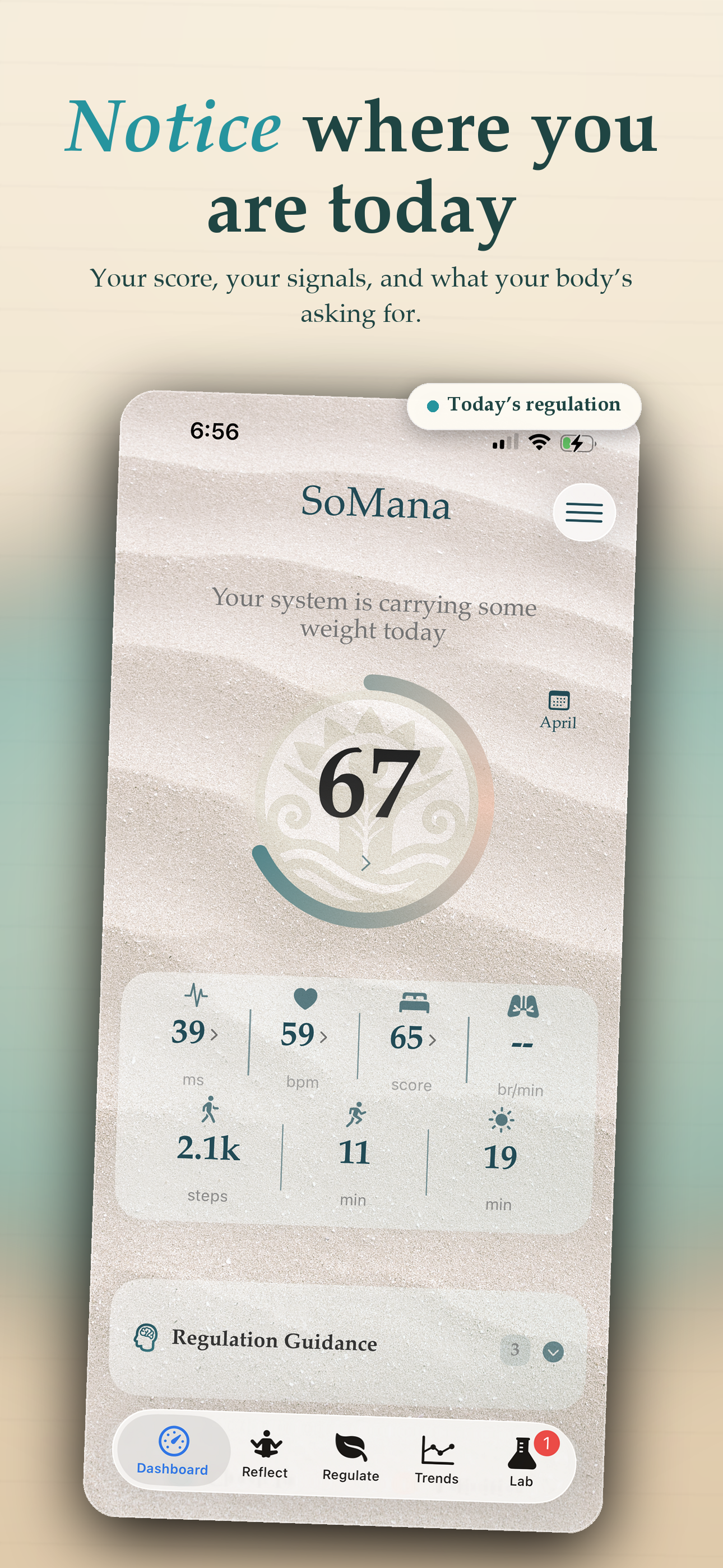
SoMana dashboard with daily Regulation Score and overnight metrics
Feature 02

Daily Reflections

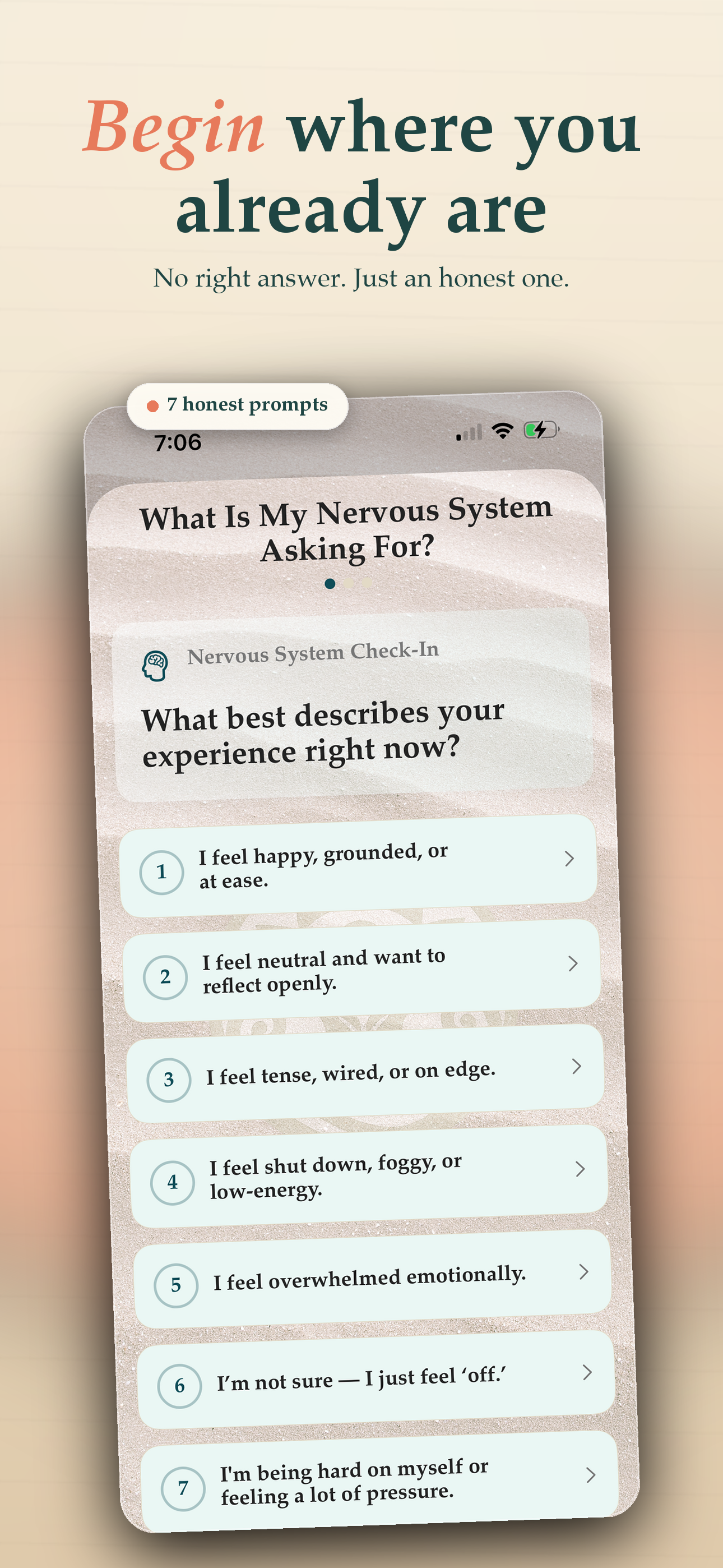
Log how you're feeling alongside your biometrics. Track your nervous system state, body sensations, mood, and what happened today. Over time, your reflections become data — patterns you couldn't see before.

SoMana daily reflection screen — logging mood, body sensations, and nervous system state
Feature 03

Pattern Maps

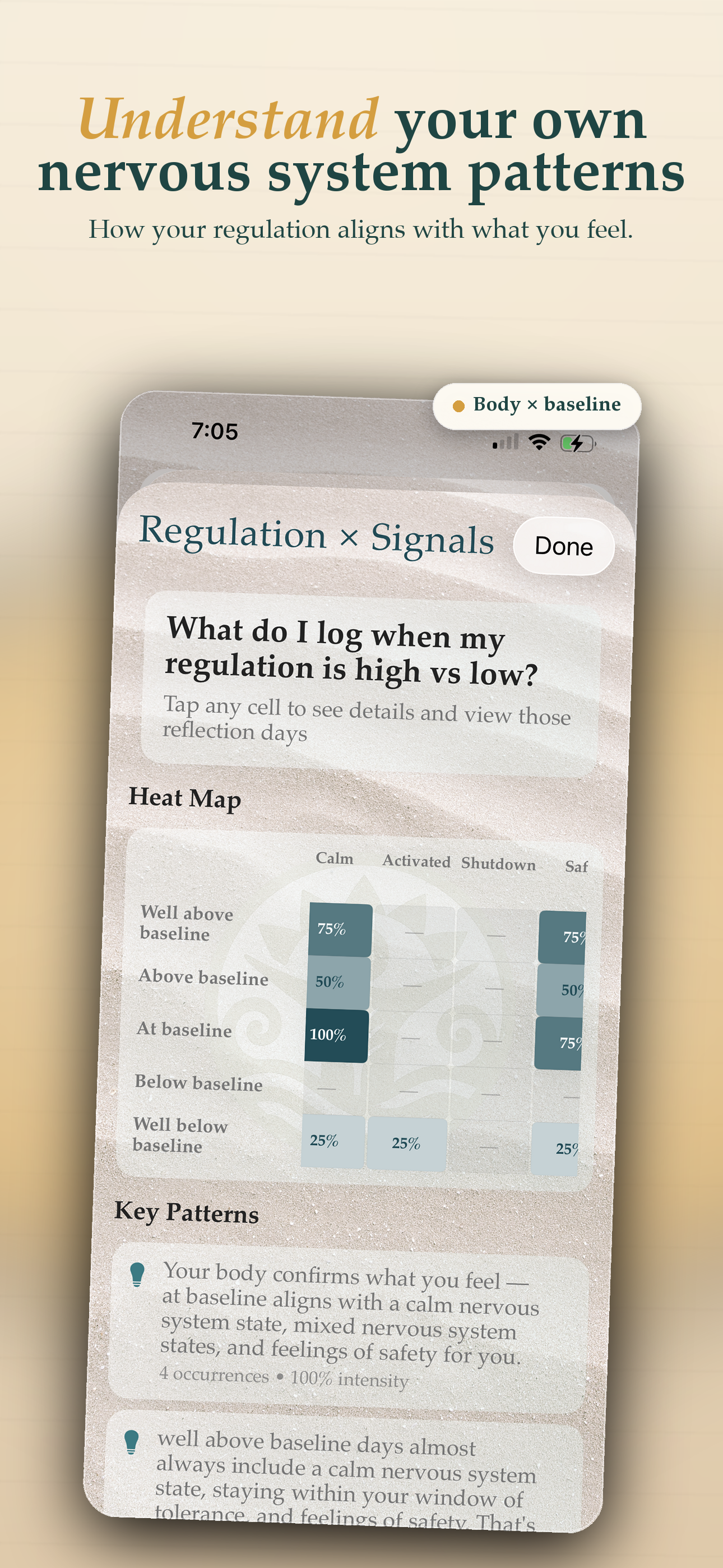
See how your signals relate to each other over time. Where does stress show up in your body? Which days does your HRV crash — and what do they have in common? Pattern Maps make the invisible legible.

SoMana Pattern Maps visualizing relationships between HRV, stress triggers, and body sensations
Feature 04

Lab Challenges

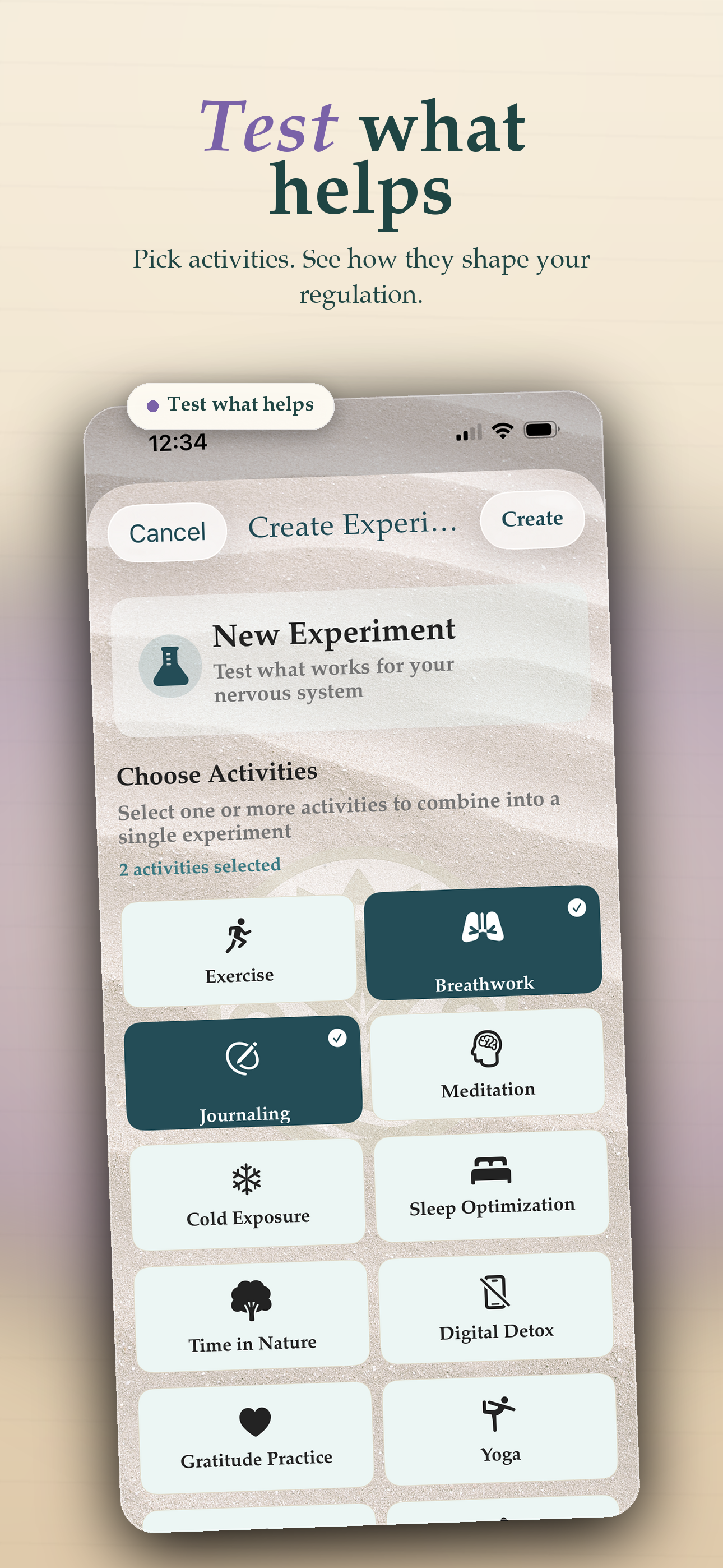
Test what actually works for you. Run 7- or 14-day experiments with breathwork, cold exposure, journaling, or your own practice — and let SoMana measure the effect against your baseline HRV.

SoMana Lab Challenges — running a 14-day experiment with HRV change measured against personal baseline
Feature 05

Regulation Toolkit

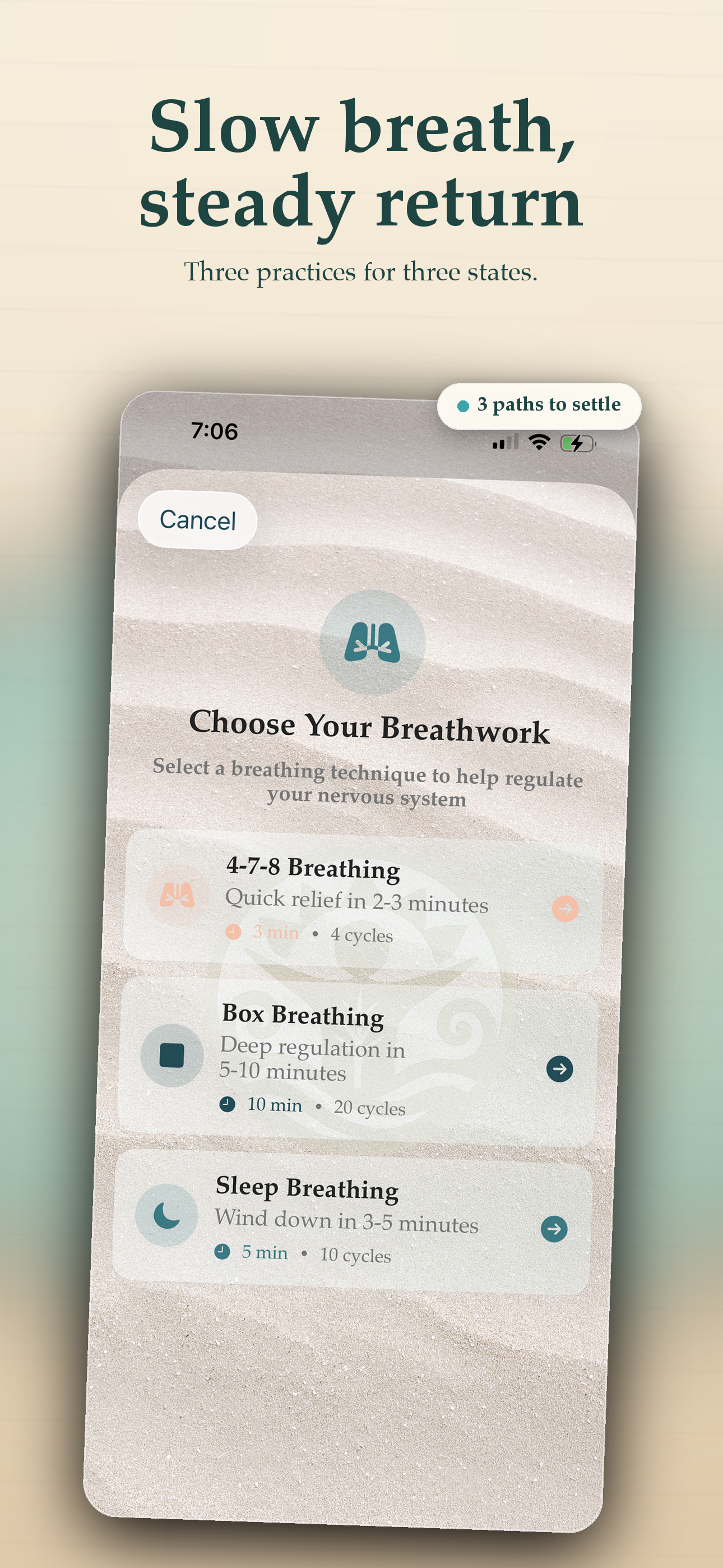
When you need to regulate, the tools are there. Guided breathwork, somatic check-ins, journal prompts, mantras, and gratitude practices — all evidence-based, all integrated with your data so you can see what works.

SoMana guided breathwork practice with visual pacing for slow resonance breathing
The science

Why HRV matters for nervous system regulation

Heart rate variability is one of the best non-invasive markers of autonomic nervous system function. The variation between heartbeats reflects how well your parasympathetic ("rest & digest") system can apply the brakes when stress activates the sympathetic side.

24+
Peer-reviewed studies inform the practices
4
Core signals: HRV, RHR, sleep, respiration
100%
Your data, stored privately on your device
N=1
Compared against your personal baseline

Higher HRV generally indicates a more resilient, adaptable nervous system. Lower HRV can signal accumulated stress, illness, overtraining, or incomplete recovery. SoMana tracks your HRV alongside resting heart rate, sleep, and respiration — compares it to your personal baseline (not population norms) — and shows you what moves the needle.

Every practice inside SoMana is grounded in research: slow breathing, resonance frequency breathing, cold exposure, expressive writing, gratitude, mantra repetition, and somatic body awareness.

Read the literature →

What you'll discover

What you'll learn about your body

SoMana doesn't tell you what to do. It shows you what's already true — and lets you act on it.

Which days your nervous system thrives — and what they have in common

What tanks your HRV and leaves you depleted

How stress shows up in your body before you consciously feel it

Which practices actually improve your regulation — not just what's supposed to work

Your personal patterns of dysregulation and recovery

How your reflections — mood, sensations, life events — correlate with biometric reality

Pricing

Simple pricing. No gimmicks.

Try SoMana free for 7 days. Cancel anytime — no questions asked.

Monthly

$6.99/mo
Billed monthly. Pause or cancel anytime.
Start free trial

All features included. No add-ons.

Subscriptions auto-renew. Manage or cancel anytime in your iPhone subscription settings. Prices shown in USD; local pricing applies.

Requirements

What you'll need

iPhone with iOS 17+

Optimized for iPhone 12 and newer

Apple Watch

Any model with a heart-rate sensor

Apple Health

With HRV and sleep tracking enabled

FAQ

Common questions

What is HRV and why does it matter?

Heart rate variability (HRV) is the variation in time between successive heartbeats. It's one of the best non-invasive markers of autonomic nervous system function — specifically, how well your parasympathetic ("rest & digest") branch can balance your sympathetic ("fight or flight") branch.

Higher HRV generally means a more resilient, adaptable nervous system. Lower HRV often signals accumulated stress, poor recovery, illness, or overtraining.

Do I need an Apple Watch to use SoMana?

Yes. SoMana reads HRV, resting heart rate, sleep, and respiratory rate from Apple Health. An Apple Watch — any model with a heart-rate sensor — is required to collect those signals overnight. SoMana itself runs on your iPhone.

What is the Regulation Score and how is it calculated?

Each morning, SoMana combines your overnight HRV, resting heart rate, sleep quality, and respiratory rate into a single 0–100 Regulation Score. It's compared against your own baseline, not population norms.

70–100 means balanced and restorative. 50–69 is steady but watchful. 0–49 means elevated stress — a sign to prioritize recovery.

Is my health data private?

Yes. SoMana reads from Apple Health on your device. Your biometric data, reflections, and pattern history stay on your iPhone. Nothing is sold, shared, or used for advertising.

Can I cancel anytime?

Yes. SoMana includes a 7-day free trial. You can cancel anytime from your iPhone subscription settings — no questions, no friction.

How is SoMana different from Whoop, Oura, or Apple Fitness?

Whoop and Oura focus on athletic recovery. Apple Fitness focuses on movement and rings. SoMana focuses on something different: nervous system regulation. It's built for people navigating chronic stress, burnout, anxiety, chronic pain, or dysregulation — not just optimization.

It combines biometric tracking with reflections, pattern maps, and evidence-based regulation practices in one integrated loop.

Is SoMana a medical device or a substitute for therapy?

No. SoMana is a wellness app, not a medical device. It does not diagnose or treat any condition, and it is not a substitute for medical care, therapy, or trauma-informed treatment. If you're navigating significant mental or physical health concerns, please work with a licensed clinician.